
Most roofing companies are not losing money because of bad roofs. They are losing money because of quiet, invisible leaks between the first ring of the phone and the signed contract. Here is the direct answer: the average roofing company leaks 15 to 30 percent of its potential revenue through seven specific gaps — slow lead response, unanswered calls, dead estimates, no-show appointments, a neglected Google Business Profile, an ignored customer database, and no system to measure any of it. Run a one-afternoon audit of all seven, and you will find six figures hiding in your own pipeline.
I am going to walk you through each leak the way I would walk a fellow owner through it across the table: what it costs, how to spot it, and what closes it.
Quick Answer
A revenue leak audit checks seven gaps where roofing companies lose booked jobs: lead response time, missed calls, estimate follow-up, appointment no-shows, Google Business Profile neglect, dead past estimates, and unmeasured pipeline. Fixing the top three — responding within 5 minutes, following up estimates 5 times, and texting back every missed call — typically recovers the most revenue with the least effort.
Where Does the First Leak Happen?
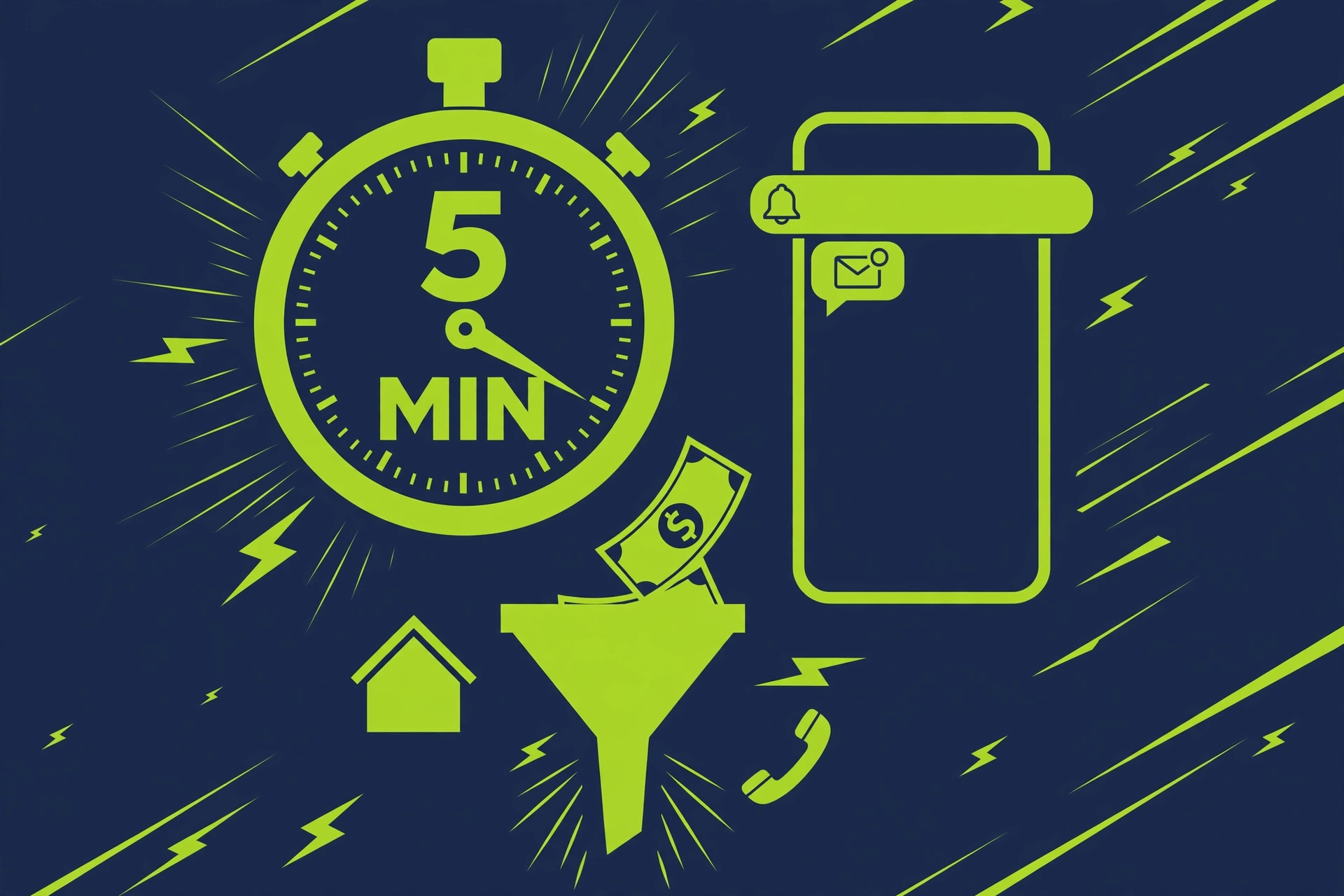
The first leak happens in the minutes after a homeowner submits a lead form. Not hours — minutes.
The most quoted research on this is still the most useful. In the Harvard Business Review study "The Short Life of Online Sales Leads," researchers audited 2,241 US companies with test web leads and found that 37 percent responded within an hour, nearly a quarter took more than 24 hours, and 23 percent never responded at all. The average response time among companies that did respond was 42 hours. And the cost of being slow was brutal: firms that contacted a lead within an hour were nearly 7 times more likely to qualify it than firms that waited just a little longer, and more than 60 times more likely than companies that waited 24 hours or more (HBR, Oldroyd et al., 2011).
A related MIT and InsideSales study of more than 15,000 leads found the odds of qualifying a lead contacted within 5 minutes were 21 times greater than waiting 30 minutes. And 35 to 50 percent of sales go to the vendor that responds first (InsideSales). The roofer who calls back in five minutes converts before the other two roofers the homeowner contacted have even seen the lead.
Put it in roofing numbers. A company running 40 web leads a month at a $12,000 average job and a 25 percent close rate books 10 jobs — $120,000 monthly. If slow callbacks cut the slow half's conversion by even a third, that is roughly $36,000 a month left on the table from leads you already paid for.
How to spot it: time your last 30 web leads from arrival to first call or text. Over 30 minutes average — or unmeasurable — means this is your biggest leak.
What closes it: a speed-to-lead system that fires a text within 60 seconds of every form submission and every Google Business Profile message, around the clock — not when the office opens, not after the crew finishes the tear-off. The 5-minute window is the whole game.
How Much Revenue Dies in Unanswered Calls?
The second leak is the ringing phone nobody answers. Storm season, the crew is on a roof, the office manager is at lunch, and a homeowner with active hail damage calls your number, gets voicemail, and calls the next roofer on the list. That call is gone forever — and unlike a form lead, you will never even see it in a report.
Unanswered calls are the leak most owners underestimate because there is no paper trail. But a homeowner calling a roofer is the hottest lead there is — ready to book, not researching. Nobody answers 100 percent of calls during storm season, so the fix is a missed-call text-back that fires automatically within a minute: a short, human text asking what they need. The lead stays alive even when you cannot pick up.
How to spot it: count last month's unanswered calls in your phone log, multiply by your inspection booking rate. Even at 20 percent, you will feel the number.
What closes it: automatic text-back on every missed call, 24/7, arriving in under a minute, routed to whoever can book the inspection.
What Happens to the Estimates You Never Follow Up?
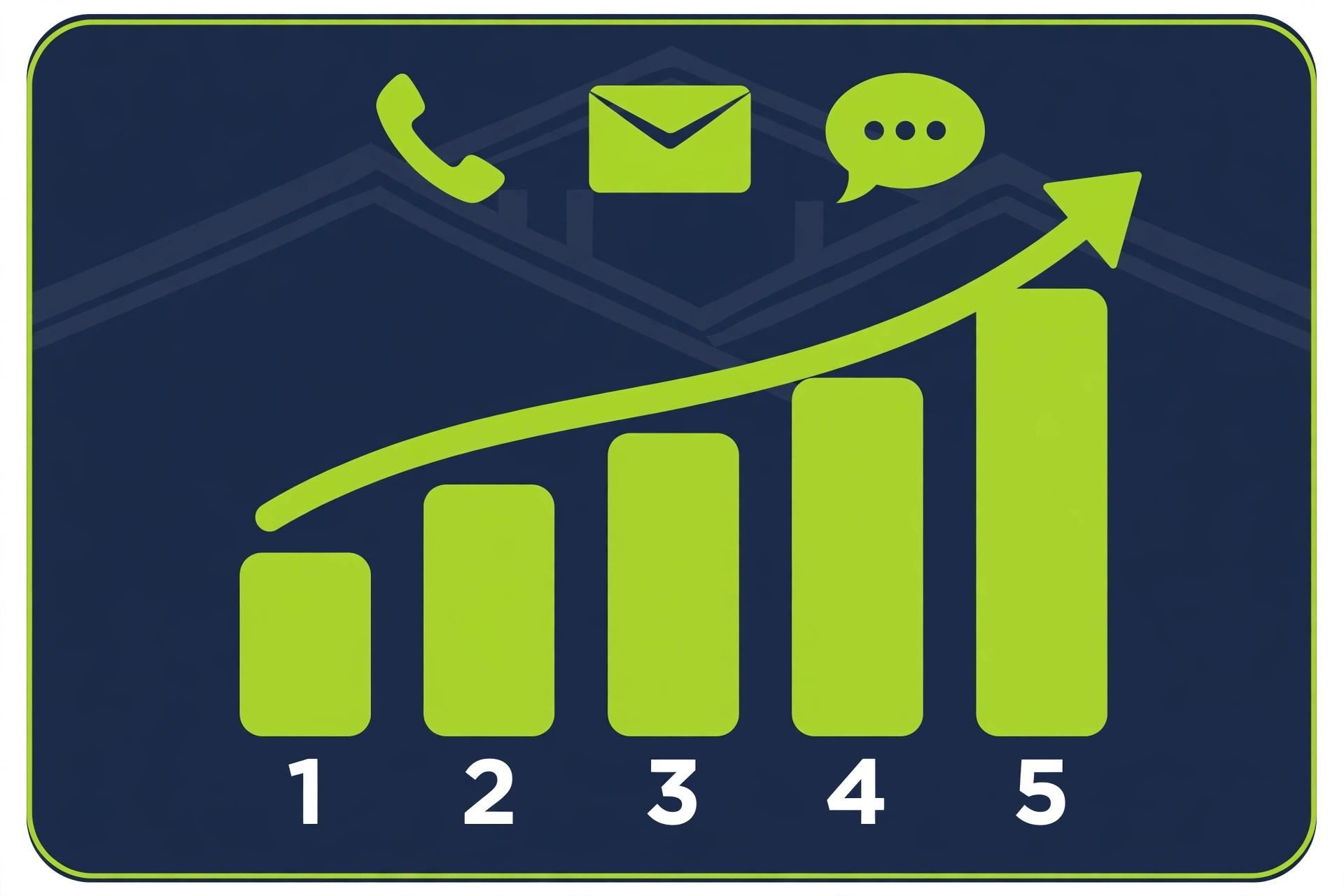
This is the leak almost every roofer admits to and almost no roofer fixes: the estimate went out, the homeowner said "we will think about it," and nobody called back. The quote sits in a drawer while the homeowner collects two more bids and signs with whoever stayed in front of them.
The follow-up research is unforgiving: 80 percent of sales require five follow-up calls after the meeting, yet 44 percent of salespeople give up after one follow-up (Brevet Group; Scripted). A homeowner comparing three $12,000 to $18,000 roof replacements does not decide on the first call. They decide after the third or fourth touch — exactly the touch most roofers never make.
Here is what a proper 5-touch estimate sequence looks like:
That sequence takes one person about an hour a week — versus the cost of estimates dying of silence.
How to spot it: count open estimates older than 30 days, then count how many got a follow-up in the last two weeks. The gap is revenue you already earned once — and abandoned.
What closes it: a written 5-touch sequence that runs automatically from the estimate date, with calls assigned, not hoped for.
Why Do Estimate Appointments No-Show — and What Does Each One Cost?
Every no-show is an estimate that never happened. Not a lost sale — a sale that never got its chance. And each one costs you twice: the two hours your salesperson burned driving out, and the job that went to the roofer who actually met the homeowner.
Roofing no-shows happen for predictable reasons: the homeowner forgot, something came up, they got another quote first. Most roofers confirm once — if at all — and then act surprised when the driveway is empty.
The system that works is three touches:
Run that for a month and watch your show rate climb. A roofer doing 40 estimates a month at a 30 percent close rate and $12,000 average job loses $36,000 in expected revenue for every 10 percent of appointments that no-show.
How to spot it: no-shows divided by scheduled estimates, last 90 days. Most roofers guess 5 percent and measure 15 to 25 percent.
What closes it: three-touch confirmation with a human face and an easy reschedule path — automated.
Is Your Google Business Profile Quietly Leaking Calls?
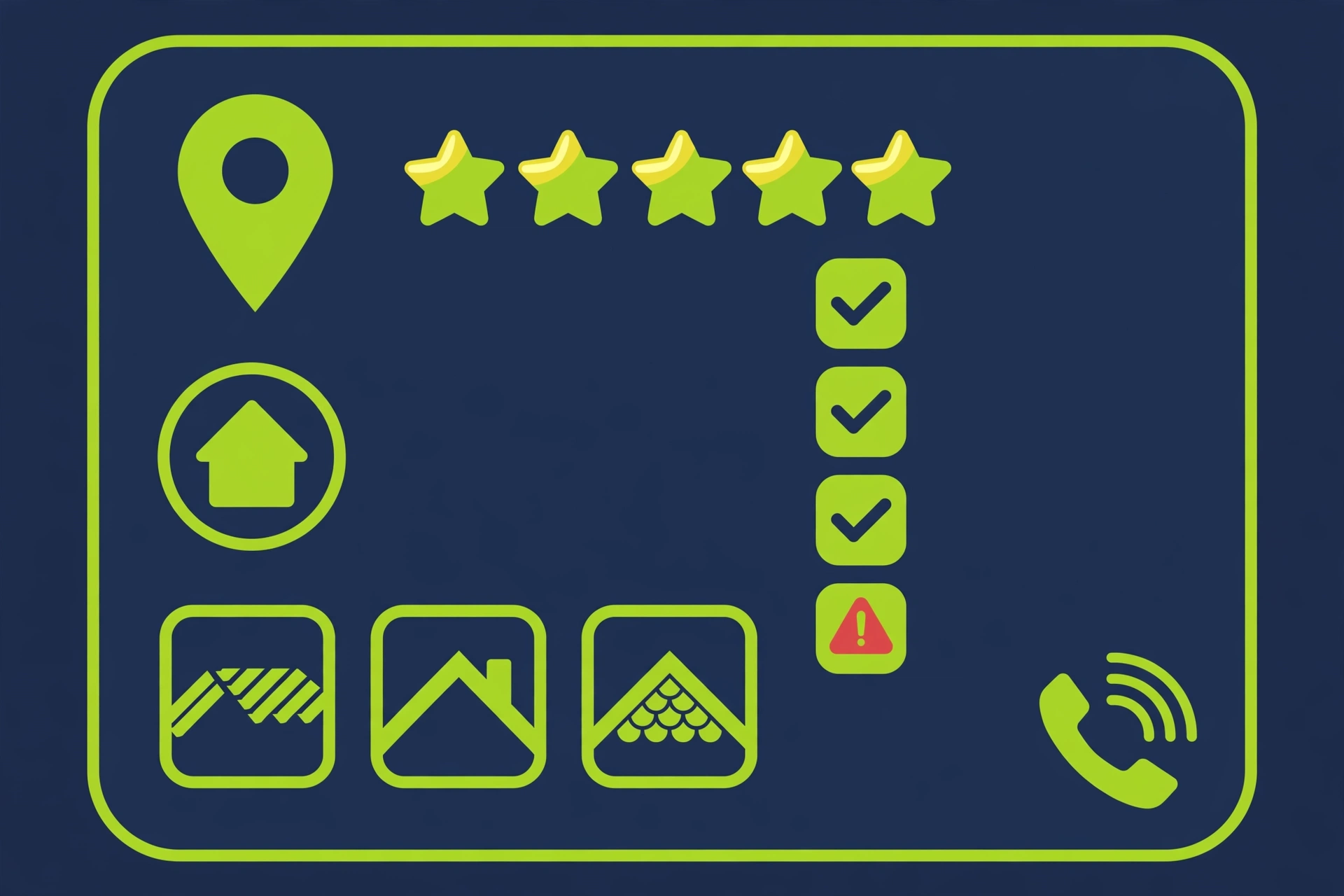
Your Google Business Profile is your storefront, and most roofers treat it like a sign hung once in 2019. Wrong hours. No posts in two years. Forty unanswered reviews. Stale photos. Every one is a leak — the homeowner comparing you to the competitor sees his profile first, and his looks alive.
The data is concrete: SOCi's analysis of 31,326 Google profiles found replying to all reviews went with 16.4 percent more conversions, a one-star higher rating with 44 percent more conversions, and top-three local placement with 93 percent more calls and clicks. Your profile is a conversion machine that is either running or rusting.
The five-minute profile audit:
How to spot it: check your profile's calls and direction requests month over month. Flat or falling while competitors' review counts climb means the leak is open.
What closes it: one afternoon to fix the listing, then a system that keeps reviews, replies, and photos fresh without anyone remembering.
What About the Money Already Sitting in Your Database?
The sixth leak is the saddest one, because the money is already yours. Past customers. Dead estimates from last year. Old inspections that never turned into jobs. They sit in your CRM or your inbox while you spend thousands on ads to find strangers.
The reactivation math is straightforward. Take an illustrative mid-size roofer with 400 past customers and 300 dead estimates. A simple two-message text campaign offering a free annual inspection — something every roof needs — at a conservative 5 percent response rate books 20 inspections from people who already trust you. At a 30 percent close rate and $12,000 average job, that is over $70,000 in revenue from one campaign to a list you already own.
How to spot it: when did you last contact every past customer? If the answer is measured in years, the leak is wide open.
What closes it: scheduled reactivation campaigns — roof-age reminders, seasonal offers, dead-estimate revivals — on a calendar, not on memory.
How Do You Run the Full Audit in One Afternoon?
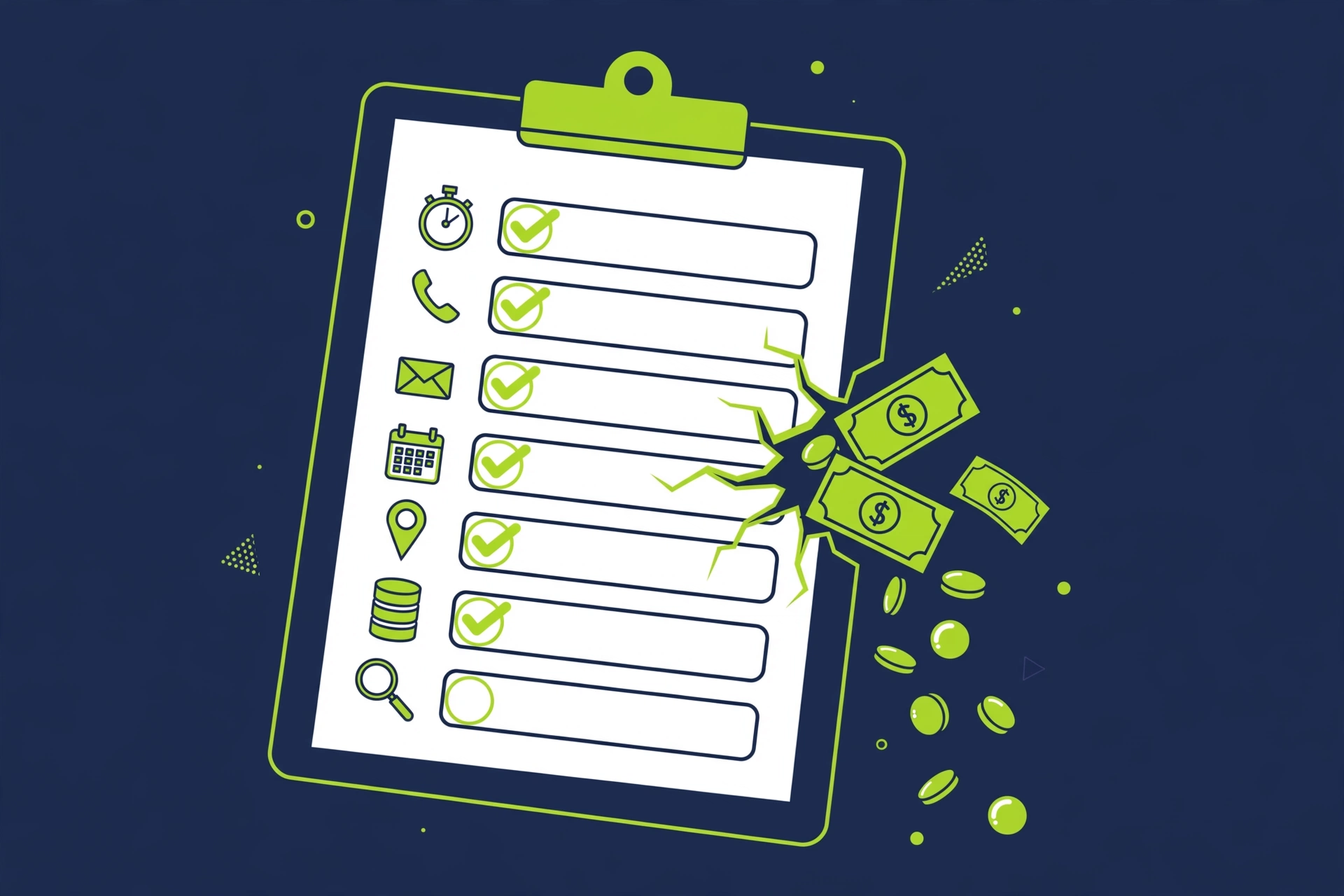
The seventh leak is the meta-leak: you are not measuring any of the first six. Sit down with your phone log, your CRM, your profile dashboard, and your estimate list, and answer these seven questions with real numbers:
1. What is my average lead response time? (Target: under 5 minutes.)
2. How many calls went unanswered last month, and how many got a text back? (Target: 100 percent texted back.)
3. How many estimates over 30 days old got a follow-up in the last two weeks? (Target: 100 percent on a 5-touch sequence.)
4. What is my estimate no-show rate over the last 90 days? (Target: under 10 percent.)
5. When did my Google Business Profile last get a new review, a new photo, and a new post? (Target: this month, this month, this month.)
6. When did I last contact my full past-customer list? (Target: this quarter.)
7. Who owns each of these numbers? (Target: a named person, not "the office.")
Score each red, yellow, or green. The reds are your leak list, in priority order — fix response time first, because it is the cheapest to fix and the fastest to pay, and re-score monthly. The audit is not a project. It is a habit.
Final math: 40 leads a month, $12,000 average job, 25 percent close rate, $120,000 monthly revenue. A 20 percent leak rate is $24,000 a month — $288,000 a year — walking out through gaps you cannot see because you never audited them. The fixes cost a fraction of one recovered job.
Bottom Line
You do not have a lead problem. You have a leak problem. The jobs are already coming in — through the form, through the phone, through the old estimates, through the past customers — and they are draining out through response times measured in hours, follow-ups that never happen, appointments that no-show, and a profile that looks abandoned.
The audit takes an afternoon and the fixes take a week. The revenue is sitting in your call log, your estimate list, and your customer database right now.
This is exactly what RepuPilot's Revenue Leak Audit does for roofing companies: we trace your pipeline from first ring to signed contract, find the leaks with real numbers, and plug them with systems that run on their own. The roofers growing fastest in your market are not getting more leads than you. They are just losing fewer of the ones they get.
Frequently Asked Questions
What is a revenue leak audit for a roofing company?
A systematic check of the seven places roofers lose booked jobs: lead response time, missed calls, estimate follow-up, appointment no-shows, profile neglect, dead past estimates, and unmeasured pipeline. One afternoon, your real numbers, a prioritized fix list.
How much revenue do roofing companies lose to leaks?
An estimated 15 to 30 percent of potential revenue. At $120,000 booked a month, a 20 percent leak rate is roughly $24,000 a month — nearly $288,000 a year. Illustrative benchmarks from industry conversion research, not guarantees.
What is the 5-minute rule for lead response?
Contacting a lead within 5 minutes makes you up to 21 times more likely to qualify it than waiting 30 minutes (MIT/InsideSales); firms responding within an hour were nearly 7 times more likely to qualify leads (HBR, 2011). And 35 to 50 percent of sales go to the first responder.
How many follow-ups close a roofing estimate?
Eighty percent of sales require five follow-ups, yet 44 percent of salespeople give up after one. Run a 5-touch sequence over 30 days: text, call, social proof, check-in call, final breakup text.
How do I reduce estimate no-shows?
Three-touch confirmation: a text at booking with your salesperson's name and photo, a day-before reminder with an easy reschedule option, and a morning-of text.
Why is my Google Business Profile not generating calls?
Usual causes: wrong hours, unanswered phone number, stale photos, no recent posts, unanswered reviews, stalled review flow. SOCi found replying to all reviews went with 16.4 percent more conversions and top-three placement with 93 percent more calls and clicks.
What is database reactivation for roofers?
Scheduled campaigns to past customers and dead estimates — roof-age inspection reminders, seasonal offers, old-quote revivals. Past customers already trust you, so reactivation converts far better than cold advertising at a fraction of the cost.