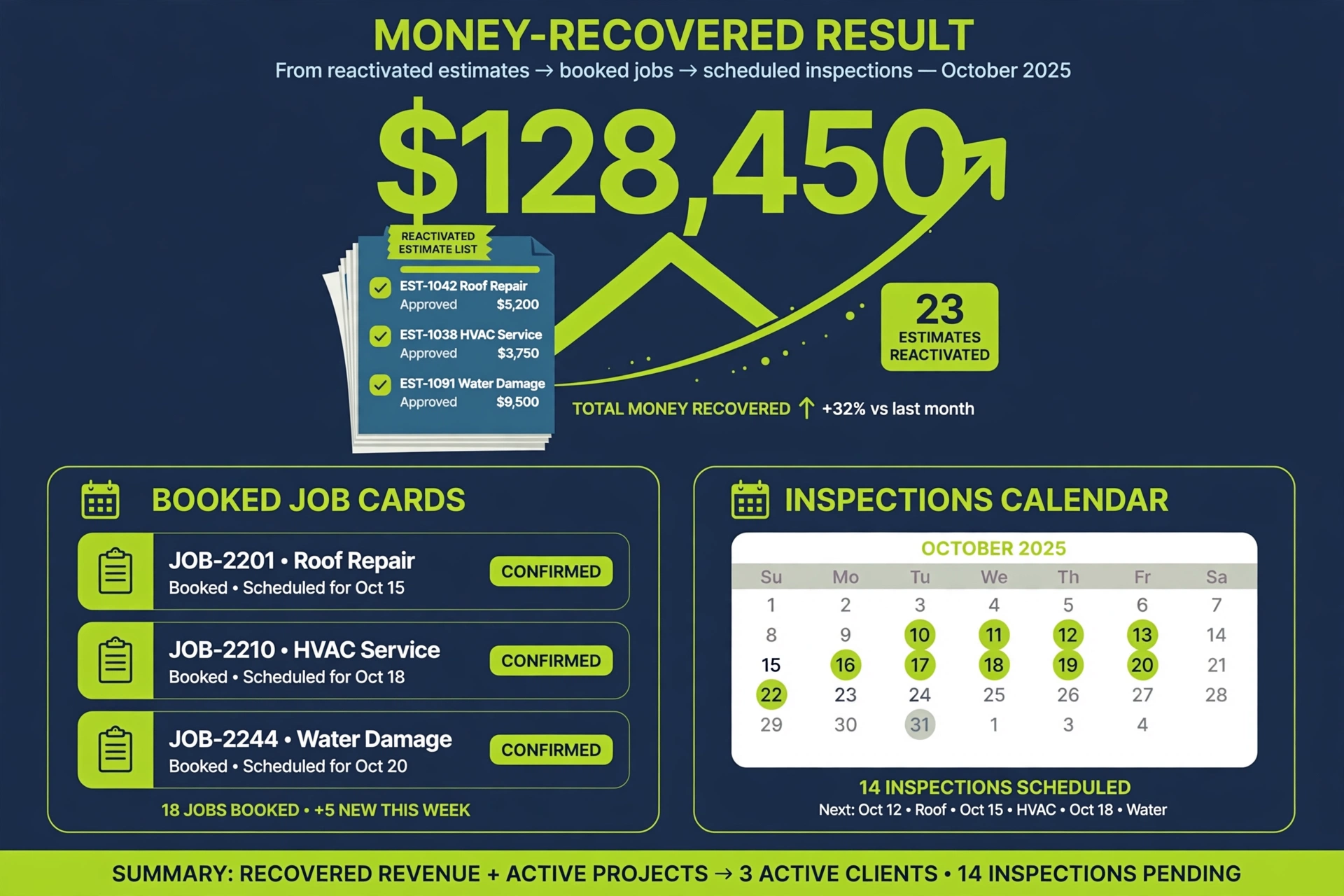
Every estimate you wrote but never closed is a line item on an invisible balance sheet. Here is the exact math to price your dead estimate list.
Your old estimate list has a dollar value, and it is bigger than you think. A roofing company with 850 dead estimates and past customers on its list is typically sitting on $170,000 to $846,000 in recoverable revenue (illustrative). Here is the exact math to price yours, step by step, with your own numbers.
Every roofer has the list: storm season estimates that went quiet, replacements priced where the homeowner said “we need to think about it” and never answered, inspections that found real problems and died anyway. Those names sit in your CRM or a spreadsheet, treated as dead weight. They are not dead weight. They are the only leads you will ever get for zero ad spend, and they have a price you can calculate this week.
Quick Answer:
Your dead estimate list is worth your reachable list size times a 3 to 15 percent reactivation rate times your average job value. For 850 old estimates at a 70 percent reachability rate, 8 percent returning jobs at $9,500 each, the list holds about $452,000 in recoverable revenue (illustrative; the embedded calculator prices your own list).
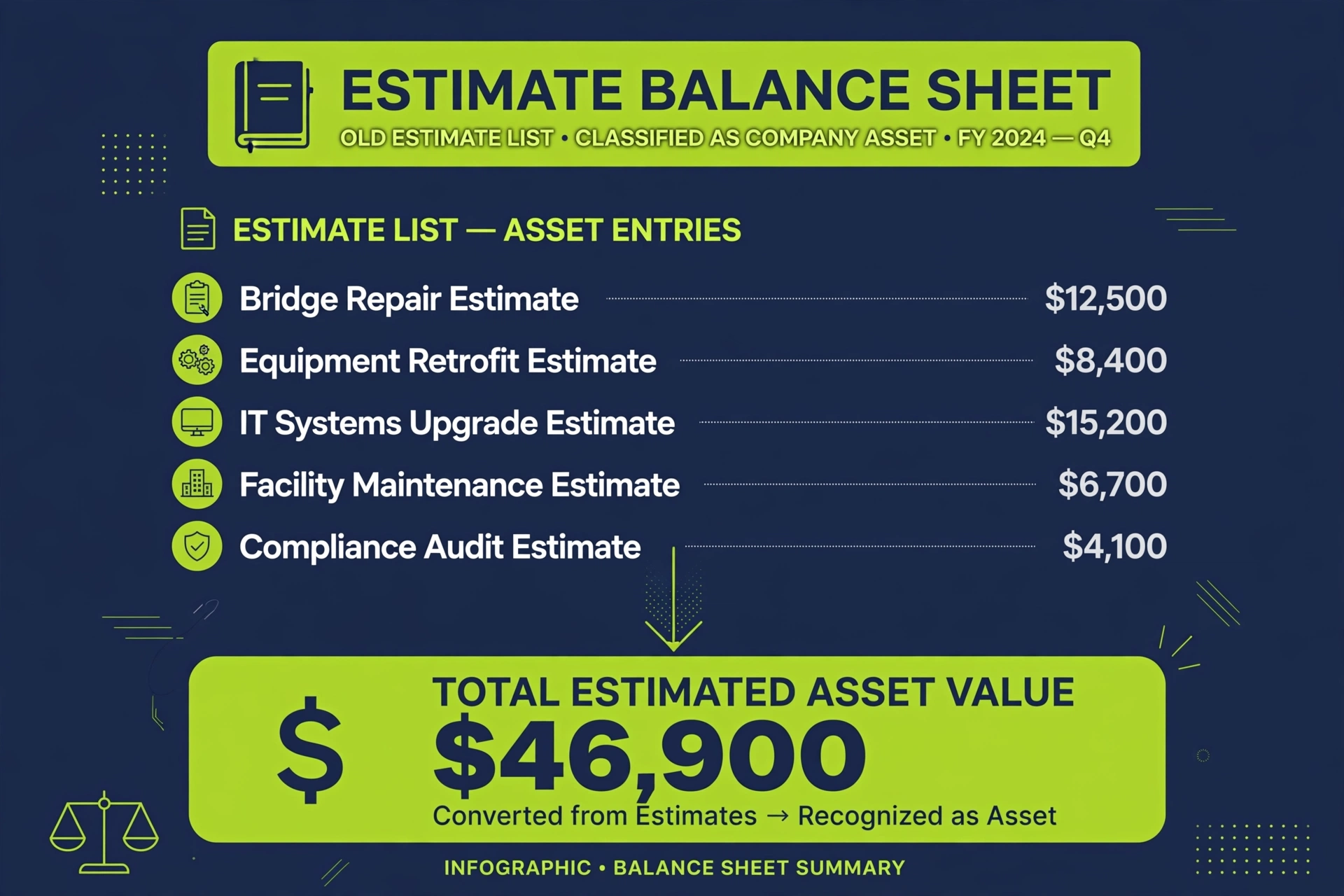
What Actually Counts as Your Dead Estimate List?
The list has four parts, and most owners undercount at least one of them.
1. Dead estimates. Every estimate you wrote, delivered, and never closed: replacements, repairs, insurance claim scopes. The homeowner chose a competitor, chose to wait, or went quiet. The roof is still aging, and the problem you documented is still on it.
2. Past customers. Every roof you installed or repaired in the last ten years. Their roof is years closer to its next replacement, and their neighbors ask for roofer recommendations every storm season. Nobody on a cold list trusts you like this group does.
3. Old inspections. Free inspections and storm damage assessments that ended with a report and no job. These homeowners hold professional documentation that their roof has issues. That paperwork ages like interest.
4. Storm season and insurance inquiries. Estimates from storm surges and claim inquiries. High intent at the moment, gone cold through no fault of the homeowner’s.
Pull all four into one count. Most owners guess their list at “a few hundred” and discover 700 to 1,000 names once they export the CRM and merge the spreadsheet. (Illustrative range.) Count everything once, deduplicate, and that total is your gross list.
How Do You Count the Names That Are Worth Pricing?
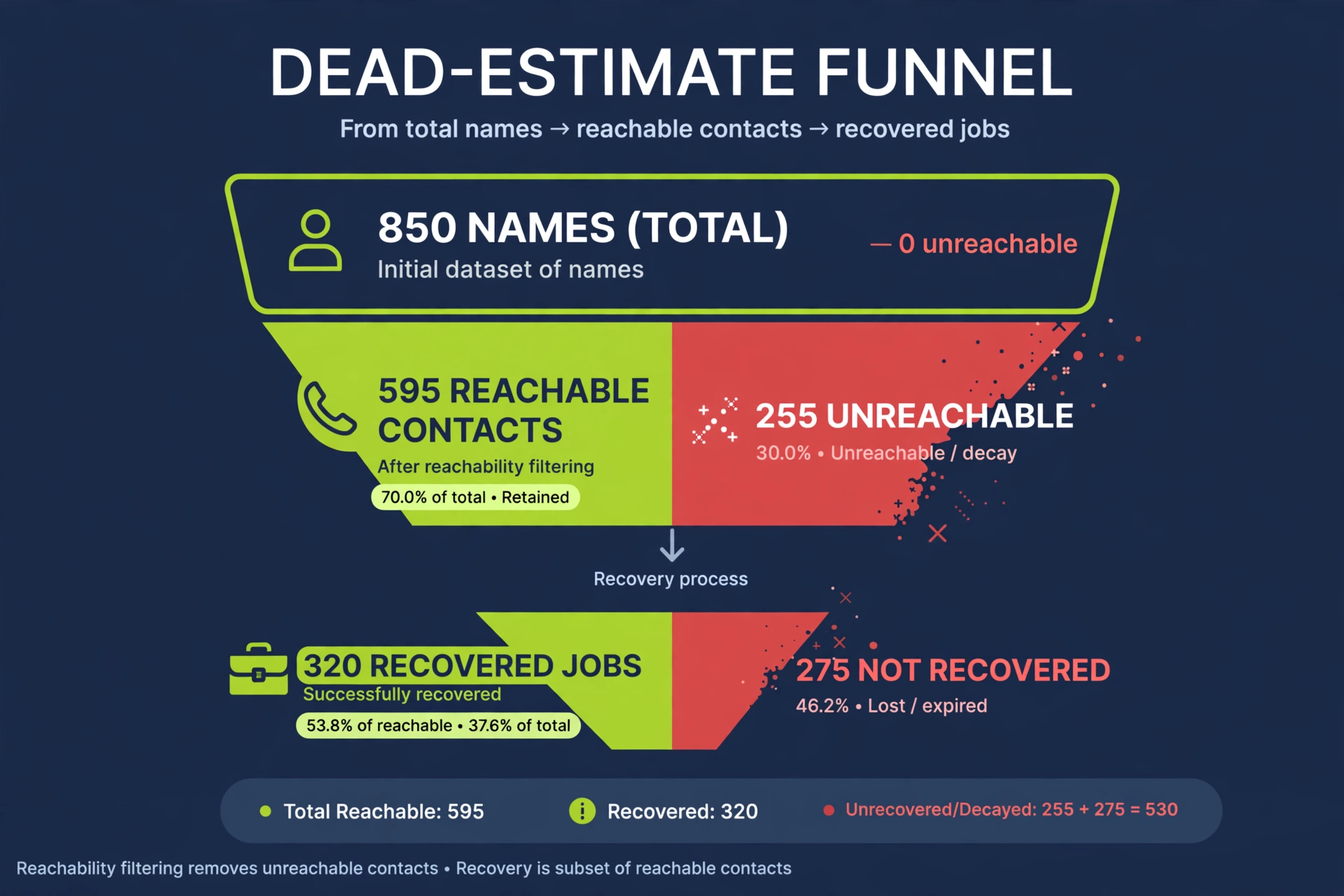
The gross list is not the valuable list. The valuable list is the reachable list: names with a working phone number, a working email, or both. Old estimates decay: people change carriers, cancel landlines, abandon inboxes. You price the list you can reach, not the list you own.
Here is the counting method.
Step 1: total names. Export every estimate, customer record, and inspection from your CRM, and add the spreadsheet names. Deduplicate by phone number first, then by name and address. This is your gross list.
Step 2: score reachability. Mark each record reachable if it has a phone number you believe is current or an email that has not bounced. As a rule of thumb, 60 to 80 percent of the gross list is typically reachable, newer estimates near the top, five-year-old records near the bottom. (Illustrative; run your own export.)
Step 3: multiply. Gross list times reachability share equals reachable list. For our worked example: 850 names times 70 percent reachability equals 595 people you can actually contact. That 595 is the number the rest of the math runs on.
Two traps to avoid. Do not throw out the old names: a ten-year-old past customer with a working number beats a two-week-old cold lead, because trust compounds. And do not confuse reachability with response. Reachability means the message can be delivered; the reactivation rate below handles what happens after.
What Is the Real Math Behind Reactivation?
The valuation formula has four inputs, all from your business.
Input 1: gross list. 850 names (illustrative; use your real count).
Input 2: reachability share. 70 percent (illustrative; use your real share).
Input 3: reactivation rate. A well run campaign typically brings back 3 to 15 out of every 100 people reached, depending on list age and the offer. That is the printed assumption inside the calculator below: a tired list with a generic blast sits near 3 percent, while a fresh list with a real inspection offer and a follow-up sequence climbs toward 15 percent. (Illustrative band, as printed in the widget.)
Input 4: average job value. $9,500 for a typical residential replacement mix (illustrative; substitute your own).
The math:
- 850 names x 70 percent reachable = 595 people you can contact
- 595 people x 8 percent reactivation (midpoint, illustrative) = 47.6, call it 48 returning jobs
- 48 jobs x $9,500 average job value = $452,000 in recoverable revenue
The range: 3 percent of 595 is about 18 jobs, or $171,000. At 15 percent it is about 89 jobs, or $846,000. So an 850-name list is worth between $171,000 and $846,000 depending on list quality and execution, with $452,000 as the illustrative midpoint.
That is not a projection of new market share. It is money sitting in records you already paid to create, from homeowners who already know your name and your work.
Try it with your own numbers below: your real list size, your real average job value, your real reachability share, and move the reactivation slider between 3 and 15 percent to see your own range.
Reactivation Value Calculator
Your old customer list and dead estimates are sitting on real money. See how much.
Enter your numbers
See your result
Estimate: a well run reactivation campaign to past customers and old estimates typically brings back 3 to 15 out of every 100 people reached, depending on list age and offer. These homeowners already trust you, which is why this is the cheapest revenue a roofer can win.
Unlock the money
RepuPilot runs the whole campaign for you: the texts, the follow ups, and the booking, while you stay on the roof.
See How RepuPilot Unlocks Your ListRun your own numbers in the free Revenue Leak Calculator: the embedded tool above prices your old estimate list, and the homepage calculator prices the rest of your leaks, missed calls, slow response, and rating gaps, in one view.
Why Is This the Cheapest Revenue in Your Business?
Because the list cost you nothing to acquire. A new roofing customer costs real money: paid search clicks, storm season bidding wars, aggregators selling the same homeowner to three competitors. (Use your own cost per booked job.) Reactivation costs the price of texts and emails plus your time.
Second, these homeowners already trust you. A past customer watched your crew work; a dead estimate homeowner sat at their kitchen table with your proposal. A cold lead knows nothing except your ad. Trust is the most expensive part of a roofing sale, and the list comes with it prepaid.
Third, the roofs are still there. Roof age does not pause because the estimate went cold. The 22-year-old shingles you documented in 2023 are 25-year-old shingles now. Time is doing your reactivation work for you: every unclosed estimate gets more urgent the longer it sits.
This is why valuation comes before action. Once you see $452,000 sitting on the list, the follow-up sequence becomes the highest ROI project in the business. Nothing else you can do this quarter returns that kind of money per dollar spent.
Why Did Those Estimates Die in the First Place?
Understanding the deaths keeps you from mispricing the resurrection. Most dead estimates did not die because of price. They died for ordinary, fixable reasons.
Timing. The budget was aimed elsewhere that month, or the insurance claim had not been filed yet. The roof could wait one more season, so it did. Timing deaths are the easiest to resurrect because the need never went away.
Decision friction. Two spouses, one roof, zero agreement on timing. A property manager waiting on the owner. The estimate was fine; the decision process stalled. A follow-up that reaches the second decision maker revives these.
Price shock. The number was bigger than expected, so they froze instead of negotiating. Many never got a second option, a financing mention, or a phased repair path. They did not reject you; they retreated from the number.
Storm season distraction. You estimated in April, hail hit in May, and every roofer in the county knocked on their door. Your proposal got buried under six competitors. These are warm names: they were ready to buy and got intercepted.
Simple follow-up failure. The estimate went out, one call was made, and the trail went cold. No sequence, no system, no second touch at 30, 60, 90 days. The most common cause of death in residential roofing estimates, and entirely a systems problem.
Notice what is NOT on this list: “they hated our company.” Almost nobody on your list dislikes you. They liked you enough to let you on their roof. The valuation math works because the relationship is intact; only the timing broke.
What Turns the Number on Paper Into Booked Jobs?
The valuation is the diagnosis; the sequence is the treatment. Here is the shape of a campaign that earns the 8 to 15 percent end of the range instead of the 3 percent end.
1. Clean and segment first. Separate past customers, dead estimates, and old inspections. They need different messages: past customers get loyalty (“we installed your roof in 2019, time for a free checkup”), dead estimates get a second look (“your 2023 estimate, updated pricing, free re-inspection”), old inspections get urgency (“the issues we documented have had two more storm seasons”).
2. Lead with a text, not a call. A short personal text referencing the original estimate beats a cold call. Name the roof, the year, the reason: “Hi, this is Mike with [Company]. We estimated your roof replacement back in spring 2023. We are doing free re-inspections this month, is the timing better now?” One text, one question, one easy yes.
3. Offer the inspection, not the sale. The original estimate died partly because it felt like a big decision. The re-entry should feel small: a free 20-minute inspection with updated photos. The inspection is the appointment, and the appointment is where roofs get sold.
4. Run a real sequence, not a single blast. Day 1: text. Day 4: follow-up with the inspection offer. Day 10: call. Day 21: email with a storm season angle. Day 45: final check-in. One blast gets the 3 percent end of the range; a five-touch sequence gets the 8 to 15 percent end. “Well run” means multiple touches over weeks, not one message and a prayer.
5. Time it to roofing seasonality. Late fall and winter are prime: storm season is over, crews have capacity, and homeowners want work done before the next hail season. An old spring estimate is at its ripest in October and November.
6. Track the recovery like revenue. Log every reactivated job back to the campaign. When the owner sees 12 reactivated jobs at $9,500 in one quarter, the list stops being a spreadsheet and becomes a line item. That is when the system gets funded permanently.
Bottom Line
Your dead estimate list is not a graveyard. It is a savings account you forgot about, holding between $171,000 and $846,000 at illustrative rates for an 850-name list. The math is simple: reachable names times reactivation rate times average job value. The acquisition cost is zero. The trust is prepaid. The roofs kept aging while you were busy chasing cold leads.
The roofers who win the next five years will not buy the most leads. They will stop letting the leads they already paid for rot in a spreadsheet. Count the list this week, price it with the calculator, then run the sequence.
This is exactly the kind of system RepuPilot runs for roofing companies: the old list gets cleaned, segmented, and worked automatically, follow-ups go out on schedule while you are on the roof, and every reactivated job lands in your calendar. Peer to peer: a system beats a spreadsheet every time.
Run your own numbers in the free Revenue Leak Calculator and price your old estimate list alongside your other leaks. Then put the list to work before the next storm season does it for your competitors.
Frequently Asked Questions
How far back should I count dead estimates?
Count everything you can reach. The last 2 to 3 years of estimates reactivate best: the homeowner remembers you and the problem is fresh. Past customers from 5 to 10 years ago still work for re-inspections, because roof age is on your side.
Why does the reactivation rate range from 3 to 15 percent?
List age, the offer, and the sequence. Fresher lists convert higher, a free re-inspection beats a generic “checking in,” and five touches beat one blast. A tired five-year-old list with one generic text sits near 3 percent; a two-year-old list with an inspection offer and a real sequence climbs toward 15 percent. (Illustrative band, as printed in the calculator.)
Do I need permission to text old estimates and customers?
Their number came from an estimate request or a job, but marketing texts have legal rules, including opt-out requirements, that vary by state and consent type. Keep messages conversational, always offer a clear opt-out, and get proper legal guidance before a large campaign. This is not legal advice.
What average job value should I use in the math?
Your real blended average across replacements and repairs from the last 12 months of closed jobs, not your biggest ticket. Most residential roofers land between $8,000 and $15,000 per replacement. The $9,500 example is illustrative; your number is better because it is yours.
Are storm season estimates worth more on the list?
Usually yes. A storm season estimate often ties to an insurance claim, a funded path to yes. Claims get delayed, adjusters change, paperwork stalls. Those names reactivate well with a message about claim deadlines and updated damage documentation, and they convert at the higher end of the band.
How fast does a reactivation campaign pay out?
Most response comes in the first 3 to 4 weeks, with a long tail over 60 to 90 days. Plan on the first booked inspections within two weeks of launch. Against paid lead programs that take months to optimize, reactivation is one of the fastest revenue levers a roofer has.
Should past customers and dead estimates get the same message?
No. Past customers get a loyalty and checkup frame, dead estimates get a second-look frame, old inspections get an urgency frame tied to what you documented. Same system, three messages. Segmentation is free and it moves the rate.
What is the biggest mistake roofers make with reactivation?
Sending one blast and declaring the list dead. One text to 850 people with no follow-up lands near 3 percent, and the owner concludes “reactivation does not work.” The owners at 15 percent run a sequence: text, follow-up, call, email, check-in, over weeks. The list did not fail. The follow-up did.