
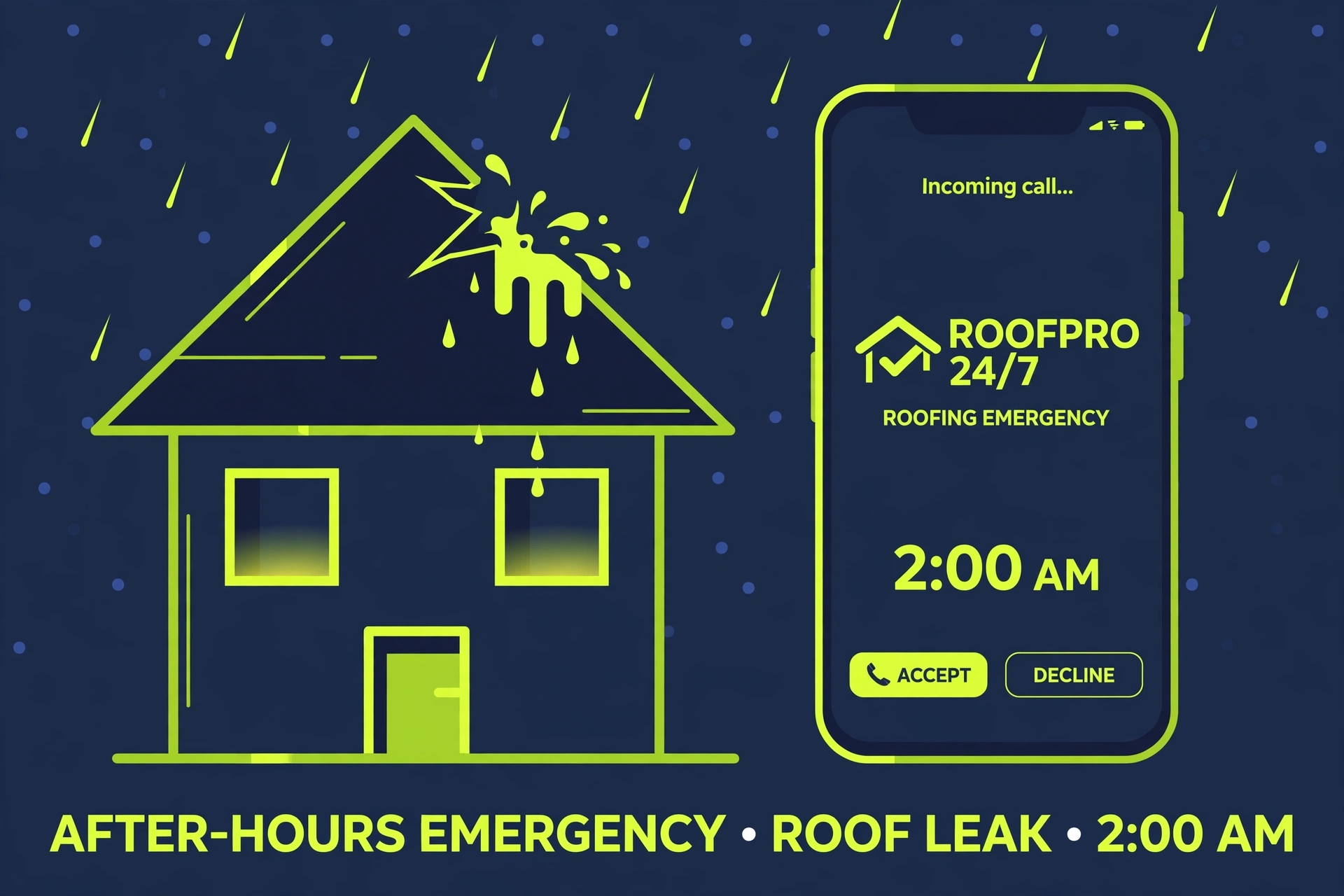
A homeowner’s roof is leaking. Water is coming through the ceiling. They search “emergency roofer near me,” find your number, and call. Your crew is on a roof. Nobody answers. They call the next company on the list.
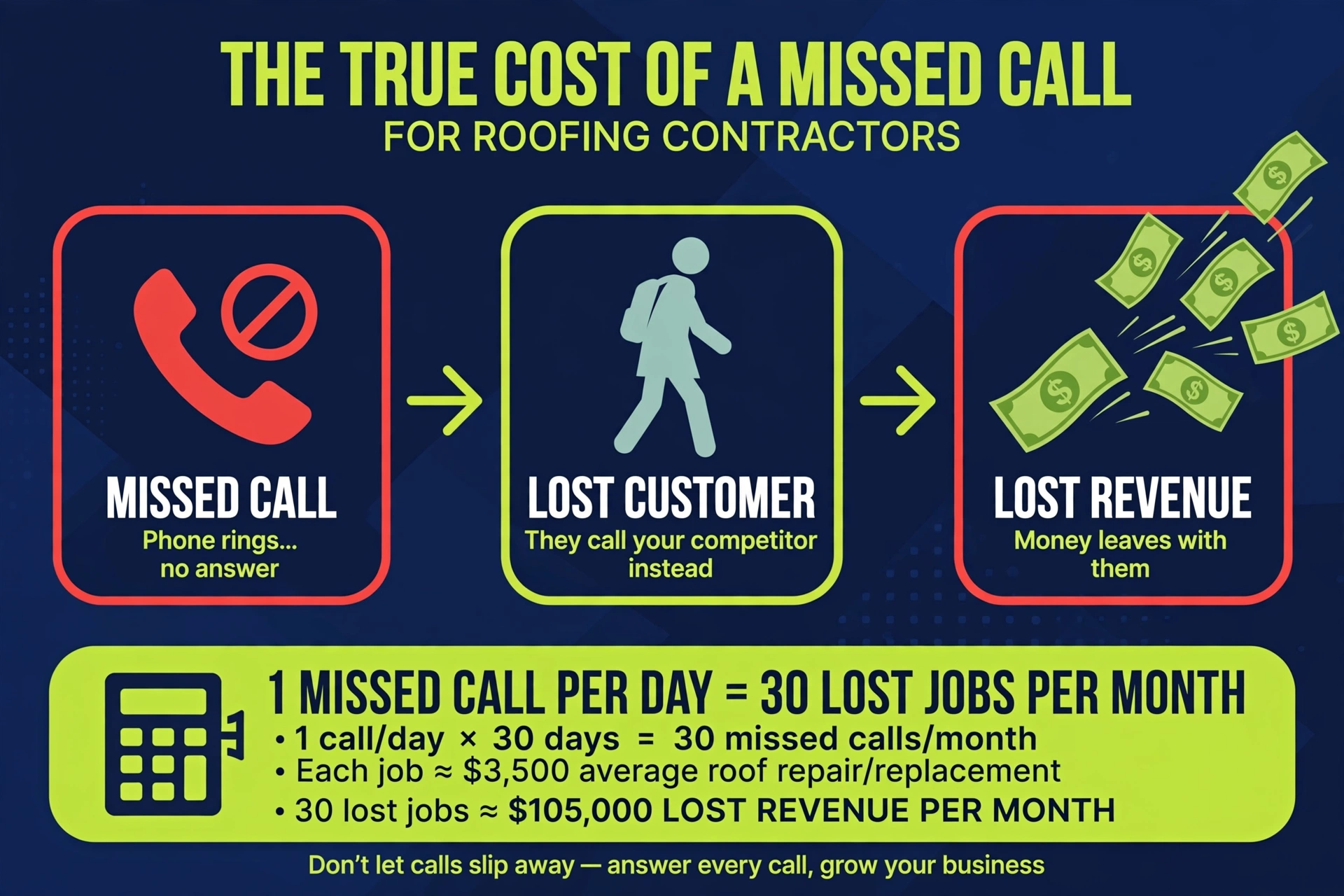
That one missed call just cost you a $12,000 job.
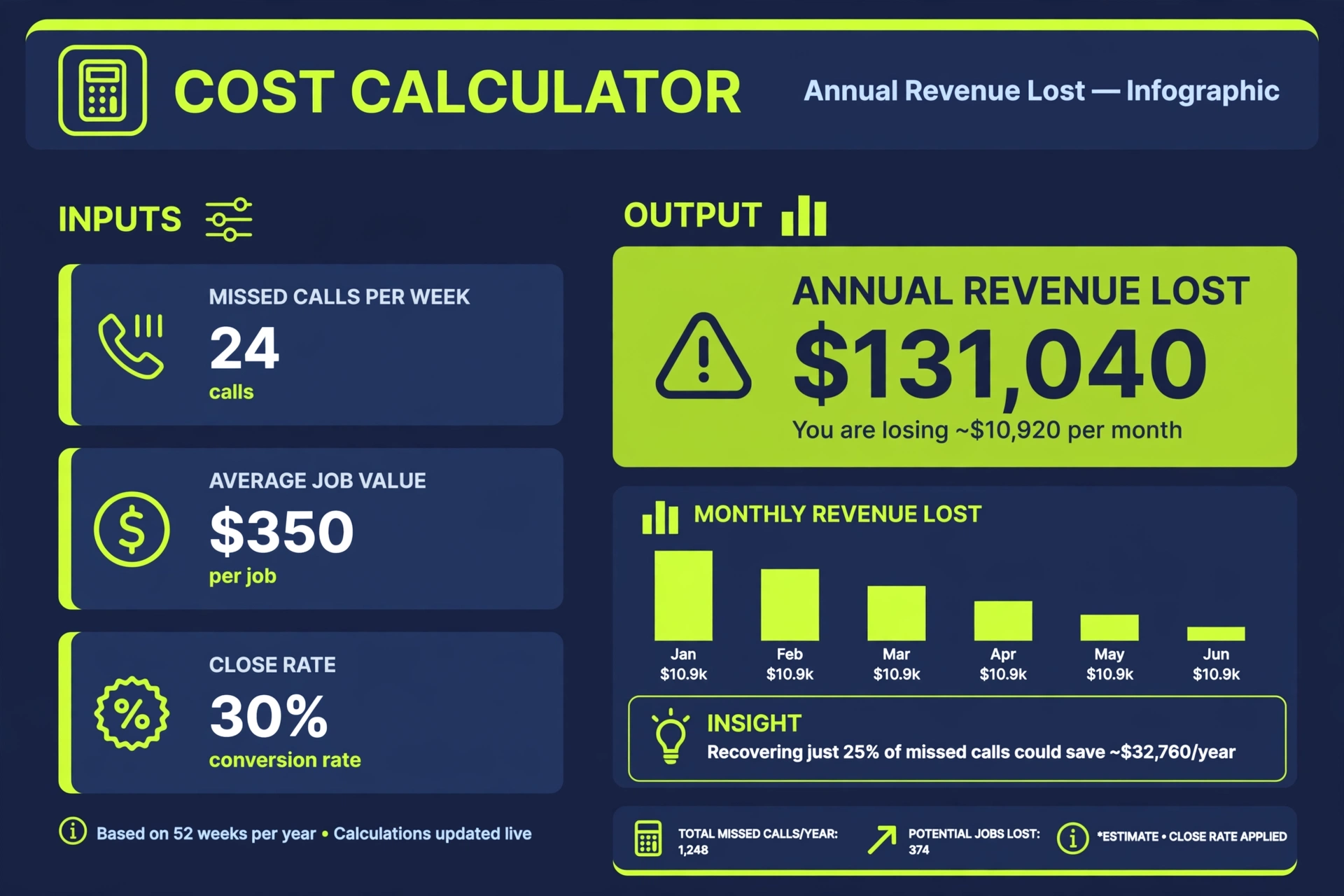
Here’s the direct answer: most roofing companies miss 20-30% of incoming calls during working hours and nearly 100% after hours, and each missed call from a homeowner with an active roofing need is worth $300-$600 in expected revenue. A roofer missing just 5 calls per week is leaving $78,000 to $156,000 on the table every year. The fix is a missed-call text-back system that automatically texts every missed caller within 60 seconds.
Quick Answer
Roofing companies lose an estimated $78,000-$156,000 per year to missed calls, based on 5 missed calls per week, a $12,000 average job value, and a 25-50% close rate on inbound leads (illustrative calculation using industry-standard ranges). Most calls are missed because crews are on roofs, not at desks. An automated text-back system texts every missed caller within 60 seconds, captures 30-40% of those callers back into conversation, and turns dead calls into booked inspections — including after-hours emergencies.
How Many Calls Does the Average Roofing Company Actually Miss?
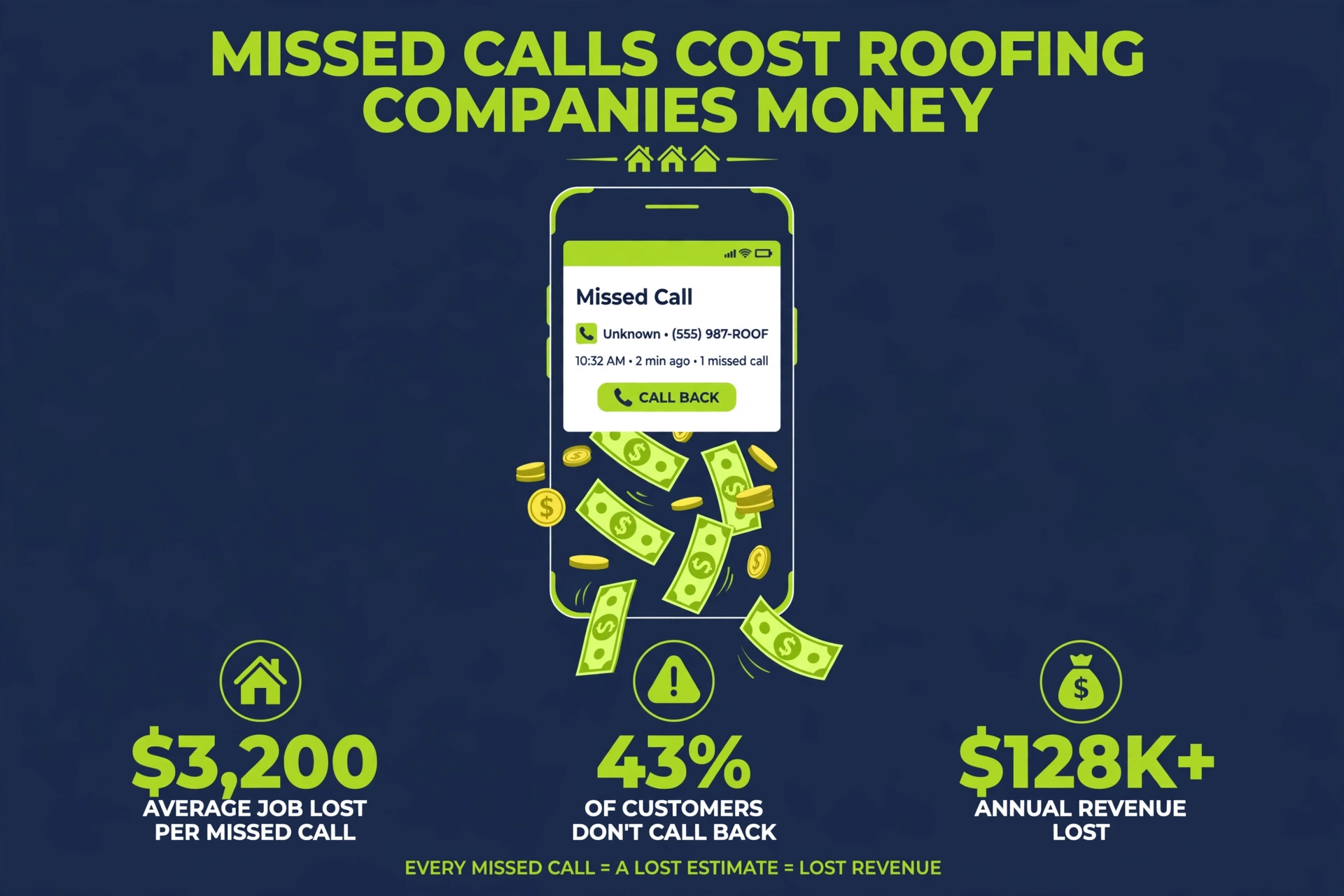
More than you think. Let’s be honest about how a roofing company operates: your best people are on roofs, in attics, or driving between jobs. The office phone rings. If you have a dedicated office person, they might catch it. If it’s after 5 PM, on a weekend, or during a storm rush — nobody’s catching it.
Industry data on small service businesses consistently shows that 20-30% of inbound calls go unanswered during business hours. For roofing specifically, the number skews higher because:
Those numbers are illustrative, but even at half those rates, the math is brutal.
What Is a Missed Call Worth to a Roofer?
Not every missed call is a $12,000 roof replacement. Let’s break down the real value:
Why Don’t Roofers Just Answer the Phone?
Because the business model fights it. Let’s be real about the options:
None of these solve the core problem: the homeowner needs a response in minutes, not hours.
What Is a Missed-Call Text-Back System?
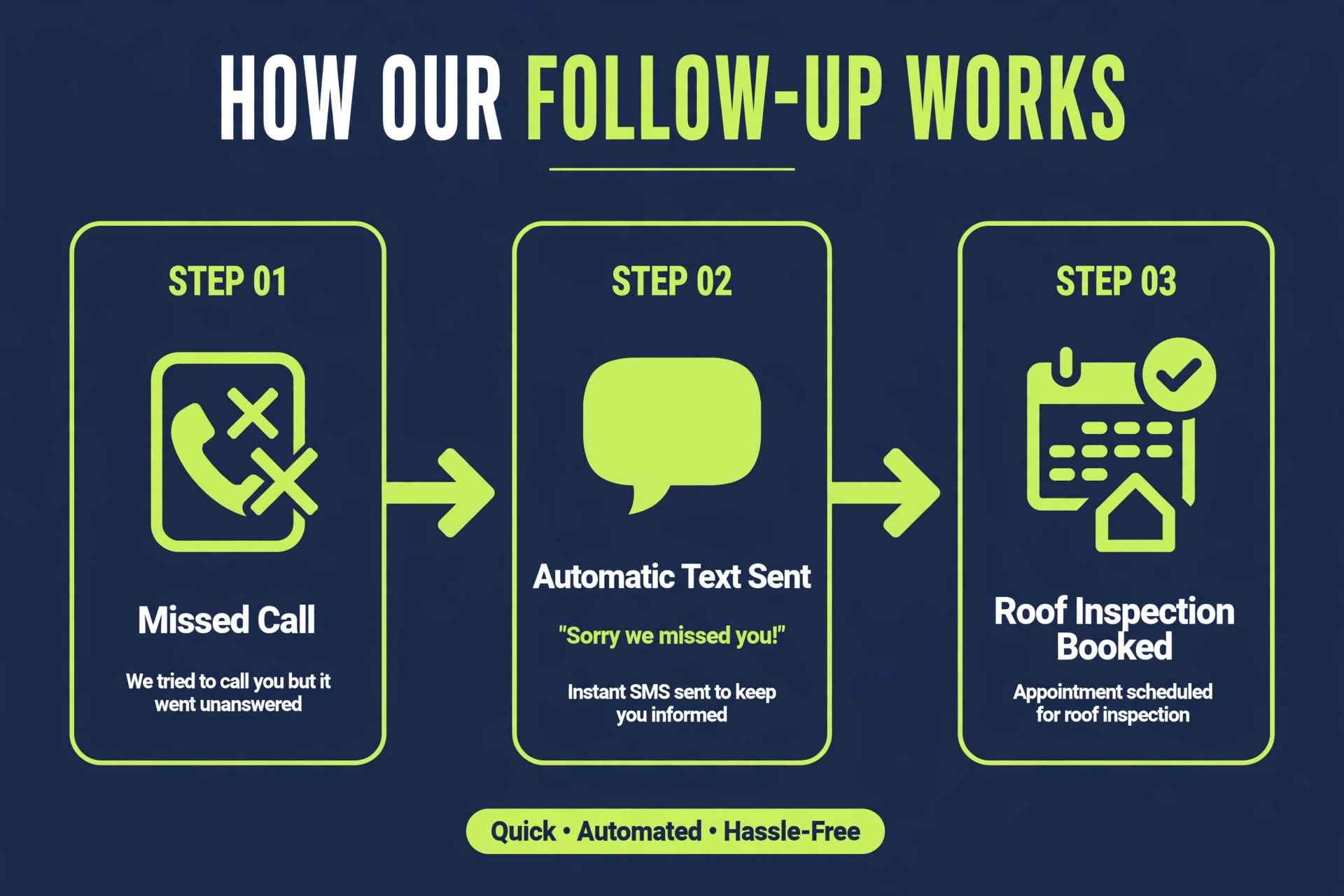
It’s beautifully simple. When someone calls your business number and you don’t answer, the system automatically sends them a text message within 60 seconds:
Hi, this is [Company Name] — sorry we missed your call! Are you dealing with a roof issue right now? Reply here and we’ll get you taken care of.
That’s it. No app to install. No new number to advertise. It works with your existing business line.
The homeowner — who was about to call your competitor — gets an instant response. They feel acknowledged. They reply with their problem. Now you’re in a text conversation, and text conversations convert.
How Fast Do You Need to Respond?
Speed is the whole game. Here’s what the data shows:
The automated text-back hits the under-1-minute window every single time — at 2 PM on a Tuesday, at 2 AM on a Sunday, during a hailstorm when your phone is ringing off the hook.
What Should the Text-Back Message Say?
It needs three things: apology, relevance, and a clear next step. Here are templates for different scenarios:
Hi, this is [Company] — sorry we missed your call! What can we help you with today? Reply here and we’ll get right back to you.
Hi, this is [Company]. We’re out of the office right now, but we got your call. Is this urgent? Reply YES and we’ll prioritize you first thing in the morning.
Hi, this is [Company] — we’re getting a high volume of calls due to the storm. We’ve got your number and will reach out shortly. If you have active leaking, reply URGENT.
The key: make it feel human, not robotic. Use the company name. Ask a question (questions get replies; statements don’t).
How Do You Turn the Text Conversation Into a Booked Job?
The text-back starts the conversation. Your job (or your system) finishes it. The playbook:
The entire exchange takes 4-6 texts. Total time: 3 minutes. Compare that to phone tag over two days.
What About Calls That Come In During Storm Season?
This is where the text-back system pays for itself 10 times over. When hail hits your market:
With a text-back system, every single caller gets an instant response — even if you’re getting 200 calls a day. The system triages: urgent leaks get flagged, estimate requests get queued, and nobody falls through the cracks.
Roofers who’ve been through hail season with a text-back system describe it as “the difference between capturing the storm and watching competitors capture it.”
The Math: What Does This Actually Cost vs. What It Saves?
Let’s do the final calculation:
The question isn’t whether you can afford a text-back system. It’s whether you can afford not to have one.
Bottom Line
Every missed call is a homeowner choosing someone else. In roofing — where jobs are worth five figures and emergencies don’t wait — the cost of a missed call is enormous, and the fix is embarrassingly simple: text them back within 60 seconds, automatically, every time.
This is exactly what RepuPilot’s missed-call text-back does for roofing companies. It watches your business line 24/7, texts every missed caller instantly, and turns dead calls into booked inspections — while you’re on the roof, asleep, or slammed during storm season. The roofers who never miss a lead don’t have bigger crews. They just have a system.
Frequently Asked Questions
Does a text-back system work with my existing business phone number?
Yes. Missed-call text-back integrates with your current business line — no need to change your number on your website, trucks, or Google profile. When a call goes unanswered, the system detects it and sends the text automatically.
Is it legal to automatically text people who call my business?
Yes, with an important distinction: when someone calls your business, they’ve initiated contact, and sending a single responsive text about their inquiry falls under conversational messaging. This is different from bulk marketing texts, which require explicit opt-in. Always include a way to opt out.
What if the caller just wanted to ask a quick question, not book a job?
Even better — quick questions over text take 30 seconds to answer and build goodwill. Many “quick question” callers become customers when they experience how responsive you are. And every text conversation is a chance to offer a free inspection.
Can the system handle calls in Spanish or other languages?
Most modern text-back platforms support multi-language auto-responses. If you serve a market with significant Spanish-speaking homeowners, a Spanish auto-text can be a major competitive advantage.
What happens if someone replies to the auto-text at 3 AM?
The system can send an immediate acknowledgement (“Thanks — we’ll follow up first thing in the morning”) and flag the conversation as urgent for your morning review. For true emergencies, it can escalate to an on-call number.
How is this different from just having voicemail?
Voicemail is a dead end — most callers don’t leave messages, and those who do wait hours for a callback. Text-back is a live conversation starter with a 98% read rate in 3 minutes. It’s the difference between “we’ll get back to you” and “we’re talking right now.”
Will this work during hail season when I get hundreds of calls?
That’s exactly when it works best. The system handles unlimited volume — every caller gets an instant response, urgent issues get flagged, and your team works through the queue systematically instead of drowning in voicemails.